

Writings

Writings
Miscellaneous Writings and Musings

Maelstrom

Maelstrom
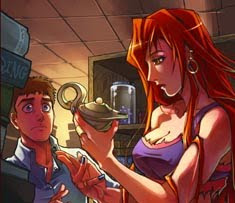
A genie and her rock band

(Novel and Short Stories)

Steal Tomorrow

Steal Tomorrow
Murder, Mystery, First Love, and the End of the World

(Novel and Short Stories)

My Books and Stories

My Books and Stories
Where to Buy, Read, Download
Showing posts with label writing. Show all posts

Exciting News!

Writer's block is an ugly thing. When you identify as a writer, live and breathe your characters as if they were your closest friends, the loss of that escape is more traumatic than the loss of a lover. Since finishing Maelstrom in 2008 I've struggled, unable to complete a work of long fiction. I wrote flash - some good, some just sort of meh, but it wasn't the same. And here lately I've written a lot of poetry, most of it tolerable only because of its brevity.

I've spent a large part of the last two years depressed, going through the motions while I wondered if I would ever have that feeling again of being on a wild ride with my most exciting imaginary friends, thousands of words a night flowing onto the page. I wondered at times if there was nothing left inside to give to my writing endeavors and if I should just give it up and go back to painting, dancing, long course triathlon, or whatever. I even wondered if life itself was worth living, since I had nowhere to escape to any more.

So when a story idea I'd had for awhile suddenly insisted I drop everything and write, it hit me from out of left field. I knew what that call meant, though. I knew I had no choice but to follow wherever it would lead.

As with any work of long fiction, I can't say how it will turn out or if it will be finished at all, but I've written 13,000 words in five days and my characters are still pestering me to tell their story. They whisper when I'm tired and nag me when I have to do the job that pays the bills. They're jealous of my time and for my part I wish I could give them all of me.

Even now, right this minute, they're wondering why I'm even talking about it when I could be writing their story...

Internet

Sometimes it's not such a bad thing to have no internet access. My connection was down this afternoon when I went home for lunch, so I started looking through the folders on my computer for something to read. I came across a novel I wrote about ten years ago and I think I'm going to see if I can clean it up and do something with it. It's deeply flawed, but I love the premise. There's some pretty decent writing in it, too. Maybe I'll post a few excerpts here as I start to work my way through it.

Teaser from Tin Soldier

In this teaser, we learn a little about how the United States fell apart and why some areas are now in chaos.

The snow had stopped but the steps to Alvi's caravan were still coated with a sheen of ice when Donovan knocked on his door. Alvi answered, no longer wearing his colorful gypsy attire, but dressed in soft gray pants and a sweater. With his tousled hair sticking up in all directions, he looked like a boy playing campout.

The wagon was more spacious than it appeared from the outside. Shelves full of goods lined the walls, and a board on a hinge could be swung down to serve as desk or workbench. Sturdy wicker chests ran along the perimeter, and colorful cloth, trinkets, shoes and specialty foods were set out like jewels on display. Light came from wall sconces that Donovan supposed were wired to the solar panel he had seen on the roof. The wagon was heated by a brazier that Alvi had filled from the kitchen stove after dinner.

"Nice place you have."

"It's home." Alvi gestured around the tiny room. "Please take your time. I don't sleep well, so I'm always up late."

As Donovan examined some of the cans and jars, he noticed the man had dropped his exuberant air and salesman's patter. "I think I just want some of the beef jerky. I don't even know what some of these other things are."

Alvi had started to sit down, but now came closer. "Those are olives," he said, pointing. "Sort of like pickles, but with the texture of a mushroom." He grinned when Donovan made a face. "They're an acquired taste, but very good."

"I'll take your word for it."

He pointed to a tin with a scene of horses and snow. "Maple syrup, all the way from Maine."

"Didn't Maine secede?"

"Yes," Alvi said. "That actually makes their syrup easier to get. The feds won't let them go because they want the timber, so there's a war up there. The soldiers send maple syrup home and the army makes sure it doesn't get stolen on the way. They don't want men to defect because their families aren't being taken care of, you know. Turncoats are always a danger in a civil war."

"Is there a true civil war going on?" Donovan asked. "I mean, across the nation? Or is it just a few local rebellions?"

The peddler pulled a couple of folding stools from pegs on the wall and took a bottle of whiskey out of one of the wicker chests. "Have a seat," he said, grabbing glasses from one of the display shelves. "I didn't want the ladies to hear it because I know how hard it is for them to keep their spirits up, but there's no reason you shouldn't know what's going on."

Donovan pulled up a stool and accepted a glass of whiskey. “This is good. Where do you get it?"

"Don't make me reveal my secrets. My sources are how I make my living."

"So what kind of news have you been hearing?"

"They say someone detonated a nuke in Washington," Alvi said. "I've heard a lot of different stories on who did it, but it really doesn't matter. The dead were mostly civilians, not government people. Everyone important is hiding now and no one's really sure if they're still alive, dead, or sick from radiation poisoning."

"So who's running things?"

"We think the elected officials are, from a bunker somewhere, but there's no way to be sure." Alvi shrugged. "Some people say the feds set off the nuke themselves so they could go into hiding and not have to answer to the people. Regardless of which story is right, it's likely we're living under a dictatorship."

"How has this impacted the wars?"

"Not much. The wars pretty much run themselves any more."

"Even the civil war? What about Texas?"

Alvi scowled. "I don't know why the feds are bothering with Texas. Three years of drought across the South have damaged their crops, the aquifers are running dry, they still haven't recovered from the hurricane that damaged their only remaining deep-water port, and the ordinary civilians are too busy squaring off by race and religion for them to do much in the way of nation-building. I say let them go. They'll be back in a few years when they realize can't make it alone. But some people say that's why they did it— seceded, you know. There's a philosophy these days that secession will end the race riots by forcing people to work together to fight the common federal enemy."

"It's a bad way to make people get along. Wars kill people and damage the land."

Alvi reached for the whiskey bottle and topped off their glasses. "Well, they went and did it, regardless of what we think about it." He capped the bottle and sat back. "I'm telling everyone not to be surprised if they send some units through the countryside looking for recruits to fight in Texas."

"You mean to kidnap and draft people." Donovan pondered this information. "That's going to be tough on me."

"Yes, you're a deserter, aren't you?"

"Is there nothing the girls don't tell you?"

"I doubt it," Alvi said, taking the question more seriously than it was intended. "I was naive when I got into this business. I knew nothing except that there was an old man who did well in this region and had died. Carina, Amalia and their parents treated me kindly. In fact, my first summer as a peddler was spent on this farm while my burro healed from an injury. They treated me like family and I will always be in their debt." He fixed Donovan with a steady eye. "There is nothing I wouldn't do for them, you understand?"

"They saved my life. I understand perfectly."

Alvi took another sip of whiskey. "Then you know why they sometimes tell me a little more than they should. Their secrets, and yours too, are completely safe with me."
~~~~~~~~
Want more? Go to Tin Soldier and read all about it!

Update on Me: Seeking Inspiration

As some of you may have noticed, I've been on a bit of a hiatus lately. For about a year now, I've struggled with my writing. I've dutifully applied the BIC (butt in chair) method each night, writing something - anything - hoping the inspiration would follow, but it hasn't. I've become increasingly frustrated, which hasn't done much to call the muse back to me.

So a few weeks ago, I decided to give myself permission to not write for awhile. Rather than wait for the inspiration to come to me in my room, I've been getting out, trying new things, being open to new ideas and new people outside my usual circle.

Last night I went with my husband to a meditation session at a Buddhist center one of his cycling friends goes to. I don't consider myself Buddhist, but there are aspects of Buddhist thought and practice that I think are compatible with most beliefs. Sit quietly and be in the moment - who can argue with that?

While we were waiting for the session to begin, Dan picked up a brochure and I looked over his shoulder. What did I see, but a writer's retreat at a Buddhist center in Colorado! In this retreat program, you learn how to apply meditation techniques to the writing process.

When I got home, I got online, feeling sure that the program must be full by now, or airfare would be outrageous. I was wrong on both counts, and my boss gave me a day off without even bothering to look at a calendar. So on October 29, I'm off to the Rockies for a weekend writing/meditation retreat!

If anyone else is interested, there seems to still be space available. The program can also be extended into a four-day or six-day workshop if you have time and funds for that sort of thing (which I do not).

So here it is: Authentic Inspiration: A Weekend for Writers with Susan Piver

The program appears to be ecumenical, so if you're intrigued, don't let the fact that it's at a Buddhist center turn you off. Contact them and ask for more information.

Book Review: Theater Geek


Let me get this confession out of the way up front: I'm a fiction writer who mostly reads non-fiction. Yes, yes, I know.

Let's be clear on another thing: This isn't so much a review of the book itself as a collection of insights I had while reading it. Writers and actors have more in common than I would've thought. How? Read on.

When I came across a review of Theater Geek by Mickey Rapkin, I knew I had to get it right away. I had never heard of Stagedoor Manor, but I was intrigued (and jealous) that there was a special theater camp for kids - one so highly regarded that agents regularly drop by, and yet the camp remains so egalitarian that there are no auditions to get in. In 208 pages (hardback), Rapkin follows three of the campers through the ups and downs of their final summer at Stagedoor, and he gives a fascinating look at the thirty-five year history of the camp, from its wild and woolly early years in the 1970s, to its more disciplined but no less energetic incarnation of today.

The book's initial appeal to me was two-fold. I was in a summer production of Alice in Wonderland when I was nine and I continued with theater in middle school, ending my involvement reluctantly in high school when band and family commitments made it no longer feasible. I am fascinated by sub-cultures, the more insular the better. For these reasons, an inside peek at Stagedoor Manor was right up my alley.

Once I got to reading it, though, I was struck by how similar actors and writers are with regard to their characters. Like us, actors create their characters, and the kids at Stagedoor are often required to come up with backstory, just like writers do. They are reminded that every time a character comes on stage, he or she wants something, and that want must be conveyed to the audience. (Sound familiar, writers?) And here's a quote that will resonate with writers, from Jeff Blumenkrantz, a former camper:
Here are the things you need to have considered before you get up and sing a song: Who are you singing to? What just happened? Why are you expressing this in this moment?
Yep, just like writing.

The best of these young actors learn to become their characters, crying real tears when the character is in pain and feeling real joy when the character is happy. How many of us haven't cried at our keyboard over a tragic scene we're writing, or experienced an oxytocin rush when our character falls in love?

Good writing is a form of method acting. And that's why you should read this book.

~~~~~~~~~
Update for Alice Audrey: Here's where we performed Alice in Wonderland: Sunken Garden Theater. The tunnel mentioned in the fact sheet was the bane of our director's existence. We kids loved it and the Griffin was particularly adept at sneaking off and making trouble down there. We gave three performances. I don't remember there being any empty seats, and it's a big theater.

About My Flash Fiction

I’ve always been one to write long stories. My childhood writing attempts (never completed) were intended as novels, with my longest taking up more than two hundred pages of college-ruled spiral notebooks before I grew bored and abandoned it.

In college I tried my hand at short stories, but “short” was always a relative term and what I produced was something more akin to novellas. This must have dismayed my creative writing professors, but they were kind about it. It was only much later, after writing four full-length novels, that I began to understand the value of writing short. I tended to ramble in my drafts, leading to months and even years of tightening and cleanup. I needed to find a way to make every word count from the outset.

At first I thought poetry was the answer, but that posed a problem. I don’t enjoy reading other people’s poetry and have even less desire to write or read any of my own.

Then someone on the Absolute Write forum suggested a flash fiction carnival. I was eager to participate, but 1,000 words? Even my shopping lists are longer than that! How could I possibly put a whole story into such a small box?

I mulled over the matter and decided to give it a try. To my surprise, the resulting story wasn’t half bad. It had a clear beginning, middle and end, with a distinct resolution. Comments were favorable and I decided to try again. Soon I was writing a story every week or so, often within the context of my previous dystopian fiction, but branching out from time to time into other genres. It was fun, it was gratifying, and I was learning to say a lot with fewer and fewer words.

Now as I take this skill back into my longer fiction, I find I have a different eye for things. Sentences and entire paragraphs I thought were necessary are expendable. One well-chosen word can take the place of several careless ones.

I’m still learning, still growing into the flash format, but I’m finding that it suits me in ways I had never expected. I started out wanting to improve as a novelist, but I’ve gained a lot more than that. I’ve found a new creative outlet.